APIs for dummies: five easy ways to know more about them
What is an API? Websites, the media and specialized companies have attempted to explain it as didactically, graphically and creatively as possible. This article is a compilation of the most interesting explanations.
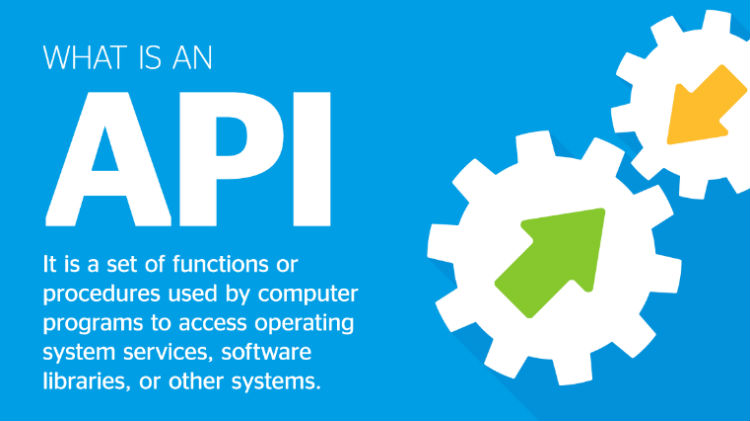
An API is a set of functions or procedures used by computer programs to access operating system services, software libraries, or other systems. However, there are other more attractive ways rather than this sober definition to know more about the benefits and uses of APIs:
1. By scrolling
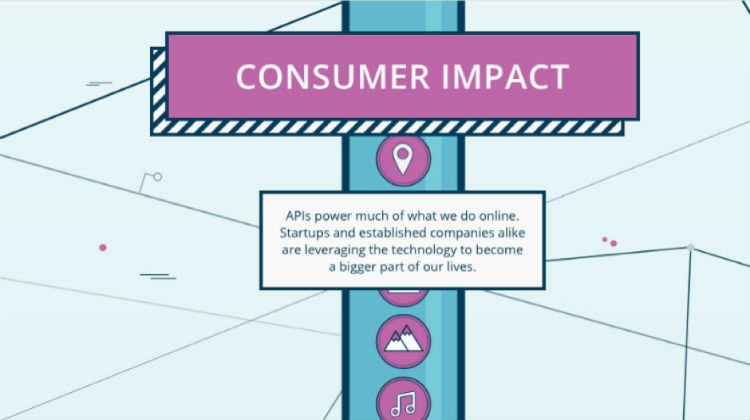
The New York Times has designed a detailed interactive infographic on APIs, where the user can choose how deeply he wants to delve into the subject by simply scrolling. It is an invitation to think about things that can be done today but couldn’t be done 15 years ago, and to think about things that companies are now doing but could not do in the year 2000. Behind all these actions there is something “greasing” the exchange of information, a modern-day Rosetta Stone known as application programming interface (API).
The user can explore the history of APIs through the various milestones and relevant data, moving downwards. He can also see how two companies are using them to enhance their digital futures: L’Oreal and IceMobile, with testimonials from their management.
At the end, the infographic proposes a game. Modern companies do not waste time or money building applications from zero, without taking advantage of the power of APIs from multiple providers, so they invite the reader to do the same. The reader has to choose the industry for the development of their app and the type of API that will be needed. The animation confirms why using these specific APIs can be innovative and make a difference.
2. At a glance
At BBVAOpen4u, there is an infographic that explains at a glance what is an API. This is an easy, quick, visual way to make the concept understandable. It explains what it is but also includes a graphic that shows how this market has grown, an illustration on how APIs work and an interesting classification by types.
SmartFile.com also has its own infographic proposal. Among other things, this includes a ranking of the industries with the highest development of APIs; the API protocols that are used the most, distributed by percentages; and the APIs registering more calls.
Along similar lines, SmartBear.com has created its own infographic, which includes sections dedicated to security, third party APIs, and even the future of APIs.
3. In depth
To propose an introduction to the world of APIs through an e-book is a very interesting resource that certain leading companies have been able to exploit. Apigee or IBM have both created their own “APIs for dummies”, with similar formats but contents structured differently.
For example, they include a series of logos that reveal content to the reader, or graphics that imitate other objects to better understand the nature of APIs and their operation (an iceberg, a Formula 1 car, etc.).
BBVAOpen4u has also used an e-book format to explain what an API is. It invites the reader to delve further and learn the advantages entailed in the development of projects or what an API Rest is. You can find it here: “101: Introduction to the world of APIs”.
Another example of an e-book developed by BBVA along these lines is “The API Economy”, by Upwork. It may be too long for a first contact with the subject, but the first part is dedicated to understanding the API concept and well-structured: what it is, its ecosystem, what it can be used for and how it works.
The following chapters cover subjects such as: private APIs versus open APIs, the new API economy, or things you should know before building your own API.
4. In motion
The video format may be one of the most attractive ways to show what an API is… but only if you can do it in two or three minutes. It also requires skills for synthesis and teaching, as well as a high degree of creativity.
Among the best examples are this video by Visa, which has demonstrated that APIs and “fun” are not at odds. It presents a simile between electrical outlets and APIs: the latter connect two softwares, while the former connect the power supply to a given device.
Mulesoft and Apigee also have videos with animated explanations that are easy to understand and well paced. The video by Mulesoft starts, like the one by the New York Times, with what is easiest – everything that is possible with APIs and that most people don’t know about. For example, placing an order, booking a restaurant or buying an airline ticket. This is when it captures the viewers attention. Apigee, on the other hand, focuses on improving user experience, which is evidently possible thanks to APIs.
5. By installments
Nevertheless, users also continue to demand articles that make it easy to understand what an API is and that, in addition, provide information in small doses that summarize everything that has to be known.
The fact is that now not only specialized media, pusblish this sort of information, but large general media have signed up for the race to disseminate everything there is to know about this new Rosetta Stone that the New York Times speaks about.
Banco Bilbao Vizcaya Argentaria, S.A. owner of this portal uses cookies and/or similar technologies of its own and third parties for the purposes of personalization, analytics, behavioral advertising or advertising related to your preferences based on a profile prepared from your browsing habits (e.g. pages visited). If you wish to obtain more detailed information, consult our Cookies Policy.
Cookie settings panel
These are the advanced settings for first-party and third-party cookies. Here you can change the parameters that will affect your browsing experience on this website.
Technical Cookies (required)
These cookies are used to give you secure access to areas with personal information and to identify you when you log in.
Name
Owner
Duration
Description
gobp.lang
BBVA
1 month
Language preference
aceptarCookies
BBVA
1 year
Configuration Accepted Cookies
_abck
BBVA
1 year
Helps protect against malicious website attacks
bm_sz
BBVA
4 hours
Helps protect against malicious website attacks
ADRUM_BTs
Salesforce Marketing Cloud
Session
Required for monitoring of the service, inherent to SFMC
ADRUM_BT1
Salesforce Marketing Cloud
Session
Required for monitoring of the service, inherent to SFMC
ADRUM_BTa
Salesforce Marketing Cloud
Session
Required for monitoring of the service, inherent to SFMC
ADRUM_BT
Salesforce Marketing Cloud
Session
Required for monitoring of the service, inherent to SFMC
xt_0d95e
Salesforce Marketing Cloud
Session
Remember user preferences (if any)
__s9744cdb192d044faa1bf201d29fafd1e
Salesforce Marketing Cloud
Session
Remember user preferences (if any)
wpml_browser_redirect_test
WPML
Session
Text translation in the portal
wp-wpml_current_language
WPML
24 hours
Text translation in the portal
Analytics Cookies
They are used to track the activity or number of visits anonymously. Thanks to them we can constantly improve your browsing experience
Your browsing experience is constantly improving.
With your selection, we cannot offer you a continuously improved browsing experience.
Name
Owner
Duration
Description
AMCV_***
Adobe Analytics
Session
Unique Visitor IDs used in Cloud Marketing solutions
AMCVS_***
Adobe Analytics
2 years
Unique Visitor IDs used in Cloud Marketing solutions
demdex (safari)
Adobe Analytics
180 days
Create and store unique and persistent identifiers
sessionID
Adobe Analytics
Session
Launch's internal cookie used to identify the user
gpv_URL
Adobe Analytics
Session
Adobe Analytics plugin: getPreviousValue Capture the value of a certain variable in the following page view, in this case the prop1
gpv_level1
Adobe Analytics
Session
Cookie used to store the DataLayer levl1 of the previous page.
gpv_pageIntent
Adobe Analytics
Session
Cookie used to store the pageIntent of the previous page.
gpv_pageName
Adobe Analytics
Session
Cookie used to store the pagename of the previous page.
aocs
Adobe Analytics
Session
Cookie that stores the first values collected at the beginning of a process.
TTC
Adobe Analytics
Session
Cookie used to store the time between the App Page Visit event and the App Completed event.
TTCL
Adobe Analytics
Session
Cookie used to store the time between the LogIn event and App Completed.
s_cc
Adobe Analytics
Session
Determine if cookies are active
s_hc
Adobe Analytics
Session
Cookie used by Adobe for analytical purposes
s_ht
Adobe Analytics
Session
Cookie used by Adobe for analytical purposes
s_nr
Adobe Analytics
2 years
Determine the number of user visits
s_ppv
Adobe Analytics
Permanent
Adobe Analytics plugin: getPercentPageViewed Determine what percentage of the page a user views
s_sq
Adobe Analytics
Session
ClickMap/ActivityMap features
s_tp
Adobe Analytics
Session
Cookie used by Adobe for analytical purposes
s_visit
Adobe Analytics
2 years
Cookie used by Adobe to know when a session has been started.
Advertising Cookies
They allow the advertising shown to you to be customized and relevant to you. Thanks to these cookies, you will not see ads that you are not interested in.
The advertising is customized to you and your preferences.
Your choice means you will not see customized ads, only generic ones.
Name
Owner
Duration
Description
OT2
VersaTag
90 days
VersaTag Cookie used to store a user id and the number of user visits.
u2
VersaTag
90 days
VersaTag Cookie where the user ID is stored
TargetingInfo 2
MediaMind
1 year
Cookie that serves to assign a unique random number that generates MediaMind.
Customization Cookies
These cookies are related to general features such as the browser you use.
Your experience and content have been customized.
With your selection, we cannot offer you a continuously improved browsing experience.
Name
Owner
Duration
Description
mbox
Adobe Target
9 days
Cookie used by Adobe Target to test user experience customization.
Looks like you’re browsing from MexicoSpainArgentinaPeruColombiaBelgiumChileUSAFranceHong KongItalyPortugalUnited KingdomTurkeyUruguayVenezuelaAlemania, so let’s show you the custom content for your
location. Change
Select a country
In order to access the private area and corresponding sandbox, select the country of the APIs you want to use.