When IoT is not the Internet of Things, but the Identity of Things
The Internet of Things was the "next big thing" a few years ago. Millions of objects connected and interconnected under the control of humans. Now, more companies are using connected devices to build products and services, which in most cases rely on a new concept of identity.
The Internet of Things was the “next big thing” a few years ago. Everyone was talking about its endless possibilities: millions of objects connected to the Net and interconnected under the control of human beings. Data accumulation for large companies and human control of the devices to improve people’s lives. Today it is a reality, but the question has changed: ¿Is IoT a problem for security? The experts have started to shift the technical and business approach: from the Internet of Things to the Identity of Things.
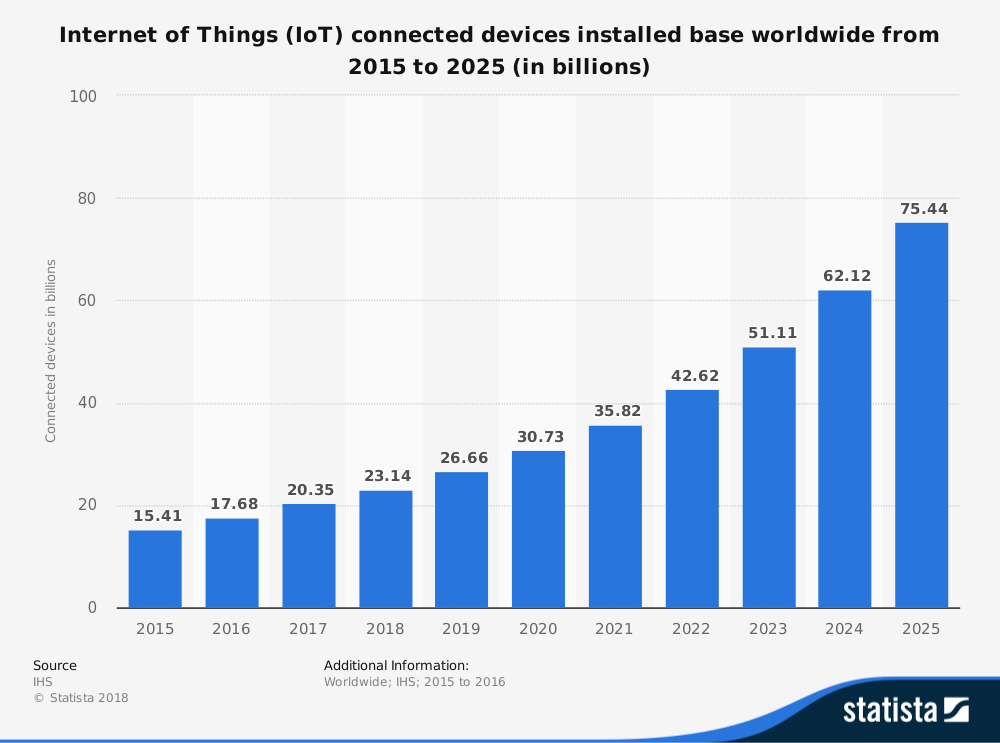
The entire system is conditioned by the huge explosion in the number of connected objects around the world, not only existing ones, but also those projected that at some point will occupy a space in the IoT ecosystem. In fact, there are many reports with forecasts on the number of objects connected to the Net: the statistics portal Statista has an estimate according to which by 2025 there will be over 75 billion connected devices around the world. More than 25 billion in 2019, nearly 31 billion in 2020 and over 50 billion devices in 2023.
This exorbitant growth in the number of connected devices has frayed every possible seam in the identify and access management systems (IAM). It is not something recent. Already in early 2015 Ant Allan, Vice-president of the identity and access management team of the technology consultancy firm Gartner, warned that IAM systems had been unable to adapt to the proliferation of connected devices, largely because traditional authentication systems had focused exclusively on people, rather than on the devices of the Internet of Things.
Managing the Identity of Things
Once one understands that global identity management cannot focus on users, but that attention has to be paid to all the entities making part of the system, the approach changes drastically. It is no longer necessary to manage only the identity of a person connected to an application or service, which is usually the case in IAM systems, but also of a user connected to a device, two interconnected devices, or a device and an application or a service. It is the new open, but secure ecosystem of the identity of the Identity of Things (IDoT), where all entities have the same interaction framework.
Within the IDoT, the concept of identity is expansive and multifaceted: what is important is not only the entity’s identity, but also the relationship among the different connected devices. In order to manage all the complexity of the new entities, it is necessary for the Identity of Things to be supported by systems that have been very successful in meeting existing needs for many years: IT Asset Management TI (ITAM) and Software Asset Management systems (SAM).
SAM is a usual practice in companies that enables cost control and the optimization of any investment made in software. In a scenario where companies can have thousands of connected devices, it is almost an obligation to prepare an up-to-date inventory to know exactly what they have and how it is being used. Today, hundreds of companies rely on their inventory of connected devices, through which they interact with customers and collect essential data for their business. A SAM strategy within the IoT becomes something even more necessary.
This is why some platforms in the cloud such as IBM Bluemix, with products related to the Internet of Things, are placing such great emphasis on systems software asset management, largely because it is a service demanded by most of their customers. Having real-time data of how a company’s software behaves can result in major cost savings, in optimizing its operation, in solving problems… Competing. In this area, Bluemix is one of the most widely used solutions on the market.
It not only has to do with security and costs, but also with user experience
Most of the times the discussion focuses almost exclusively on identity management as an essential condition for guaranteeing security, but the simple truth is that there are other elements that are important within the Internet of Things. One of them is identity as a guarantee of a satisfactory user experience. And this issue is not addressed as often. Properly managing the identity of users connected to their devices, whether a household appliance or a vehicle, improves experience and the benefits of the IoT.
Many applications and services that rely on the interaction between clients and devices or between devices need proper identity management to ensure the existence of the product or service itself. Banks and credit card manufacturers like Visa or Mastercard have explored for some time the relationship between clients, devices and mobile payments. Today, the greatest problem is the lack of system flexibility because any payment service will always be associated with the concept of personal identity (linked to a user), while the other types of entities that coexist within this system are left out.
The natural evolution is for user identity authentication to increasingly fall to identity codes, geolocation or biometric factors built into the devices.
Banco Bilbao Vizcaya Argentaria, S.A. owner of this portal uses cookies and/or similar technologies of its own and third parties for the purposes of personalization, analytics, behavioral advertising or advertising related to your preferences based on a profile prepared from your browsing habits (e.g. pages visited). If you wish to obtain more detailed information, consult our Cookies Policy.
Cookie settings panel
These are the advanced settings for first-party and third-party cookies. Here you can change the parameters that will affect your browsing experience on this website.
Technical Cookies (required)
These cookies are used to give you secure access to areas with personal information and to identify you when you log in.
Name
Owner
Duration
Description
gobp.lang
BBVA
1 month
Language preference
aceptarCookies
BBVA
1 year
Configuration Accepted Cookies
_abck
BBVA
1 year
Helps protect against malicious website attacks
bm_sz
BBVA
4 hours
Helps protect against malicious website attacks
ADRUM_BTs
Salesforce Marketing Cloud
Session
Required for monitoring of the service, inherent to SFMC
ADRUM_BT1
Salesforce Marketing Cloud
Session
Required for monitoring of the service, inherent to SFMC
ADRUM_BTa
Salesforce Marketing Cloud
Session
Required for monitoring of the service, inherent to SFMC
ADRUM_BT
Salesforce Marketing Cloud
Session
Required for monitoring of the service, inherent to SFMC
xt_0d95e
Salesforce Marketing Cloud
Session
Remember user preferences (if any)
__s9744cdb192d044faa1bf201d29fafd1e
Salesforce Marketing Cloud
Session
Remember user preferences (if any)
wpml_browser_redirect_test
WPML
Session
Text translation in the portal
wp-wpml_current_language
WPML
24 hours
Text translation in the portal
Analytics Cookies
They are used to track the activity or number of visits anonymously. Thanks to them we can constantly improve your browsing experience
Your browsing experience is constantly improving.
With your selection, we cannot offer you a continuously improved browsing experience.
Name
Owner
Duration
Description
AMCV_***
Adobe Analytics
Session
Unique Visitor IDs used in Cloud Marketing solutions
AMCVS_***
Adobe Analytics
2 years
Unique Visitor IDs used in Cloud Marketing solutions
demdex (safari)
Adobe Analytics
180 days
Create and store unique and persistent identifiers
sessionID
Adobe Analytics
Session
Launch's internal cookie used to identify the user
gpv_URL
Adobe Analytics
Session
Adobe Analytics plugin: getPreviousValue Capture the value of a certain variable in the following page view, in this case the prop1
gpv_level1
Adobe Analytics
Session
Cookie used to store the DataLayer levl1 of the previous page.
gpv_pageIntent
Adobe Analytics
Session
Cookie used to store the pageIntent of the previous page.
gpv_pageName
Adobe Analytics
Session
Cookie used to store the pagename of the previous page.
aocs
Adobe Analytics
Session
Cookie that stores the first values collected at the beginning of a process.
TTC
Adobe Analytics
Session
Cookie used to store the time between the App Page Visit event and the App Completed event.
TTCL
Adobe Analytics
Session
Cookie used to store the time between the LogIn event and App Completed.
s_cc
Adobe Analytics
Session
Determine if cookies are active
s_hc
Adobe Analytics
Session
Cookie used by Adobe for analytical purposes
s_ht
Adobe Analytics
Session
Cookie used by Adobe for analytical purposes
s_nr
Adobe Analytics
2 years
Determine the number of user visits
s_ppv
Adobe Analytics
Permanent
Adobe Analytics plugin: getPercentPageViewed Determine what percentage of the page a user views
s_sq
Adobe Analytics
Session
ClickMap/ActivityMap features
s_tp
Adobe Analytics
Session
Cookie used by Adobe for analytical purposes
s_visit
Adobe Analytics
2 years
Cookie used by Adobe to know when a session has been started.
Advertising Cookies
They allow the advertising shown to you to be customized and relevant to you. Thanks to these cookies, you will not see ads that you are not interested in.
The advertising is customized to you and your preferences.
Your choice means you will not see customized ads, only generic ones.
Name
Owner
Duration
Description
OT2
VersaTag
90 days
VersaTag Cookie used to store a user id and the number of user visits.
u2
VersaTag
90 days
VersaTag Cookie where the user ID is stored
TargetingInfo 2
MediaMind
1 year
Cookie that serves to assign a unique random number that generates MediaMind.
Customization Cookies
These cookies are related to general features such as the browser you use.
Your experience and content have been customized.
With your selection, we cannot offer you a continuously improved browsing experience.
Name
Owner
Duration
Description
mbox
Adobe Target
9 days
Cookie used by Adobe Target to test user experience customization.
Looks like you’re browsing from MexicoSpainArgentinaPeruColombiaBelgiumChileUSAFranceHong KongItalyPortugalUnited KingdomTurkeyUruguayVenezuelaAlemania, so let’s show you the custom content for your
location. Change
Select a country
In order to access the private area and corresponding sandbox, select the country of the APIs you want to use.